At a glance
Key takeaways
- TellTide is a strong fit when several feedback types need private triage before public visibility.
- Supahub is a strong fit when feedback boards, prioritization, roadmap, and changelog should form one customer-facing hub.
- Both can embed into a product, but they organize the workflow differently.
Publisher disclosure: TellTide publishes this comparison. Vendor descriptions are based on public documentation, not a hands-on benchmark. TellTide requires a Pro subscription; it does not include a built-in changelog, automated email notifications or ready-made integrations.
Branded customer hub or focused private intake?
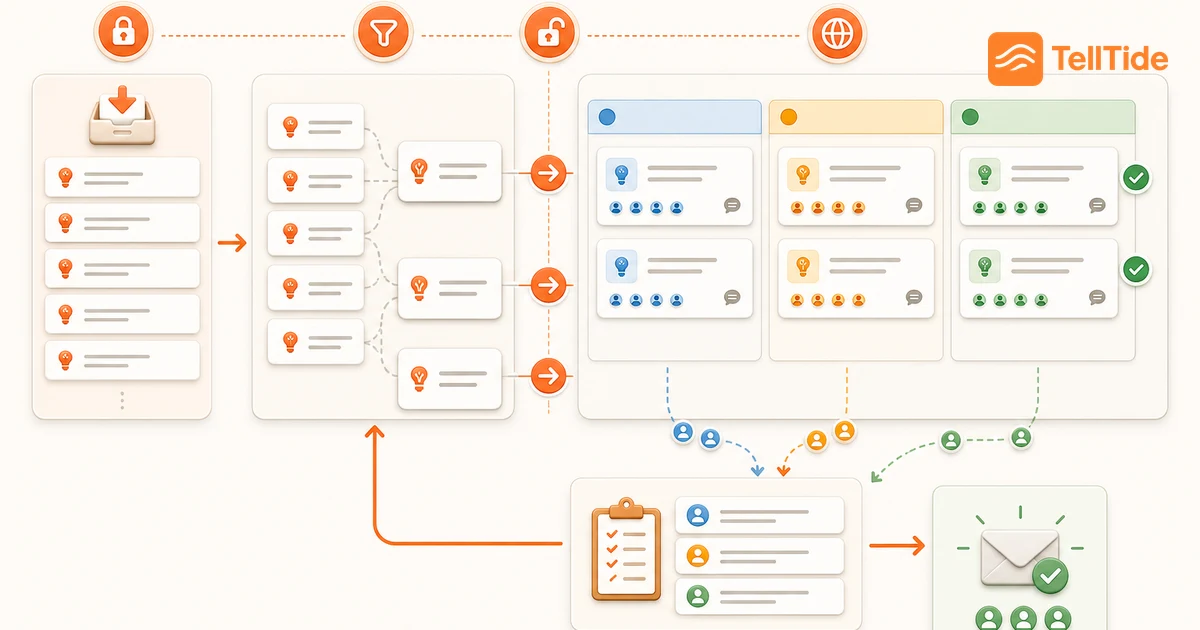
TellTide is designed for teams that want an easy feedback launcher without making every submission public. Reviews, bugs, feature requests, and general feedback enter the private inbox, and the team publishes only selected requests to its roadmap.
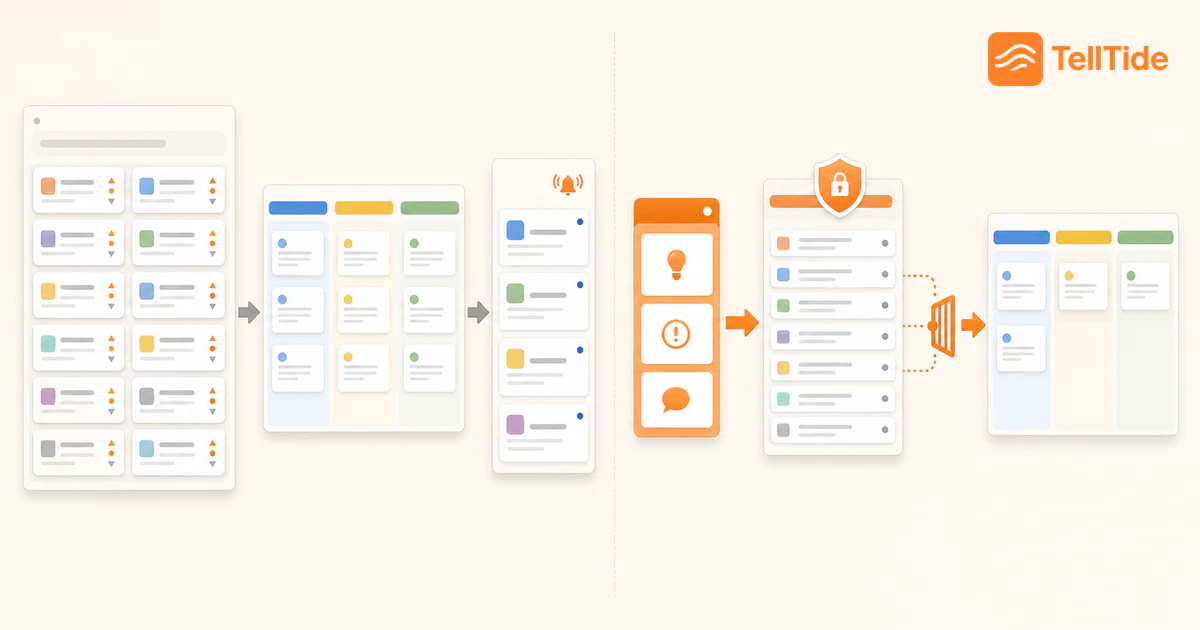
Supahub is designed as a broader feedback hub. Its public product materials connect a customizable feedback portal and in-app widgets with prioritization, a public roadmap, product changelog, release notes, and a configurable preferred language for the hub.
Supahub’s portal-and-changelog workflow compared with TellTide
| Capability | TellTide | Supahub |
|---|---|---|
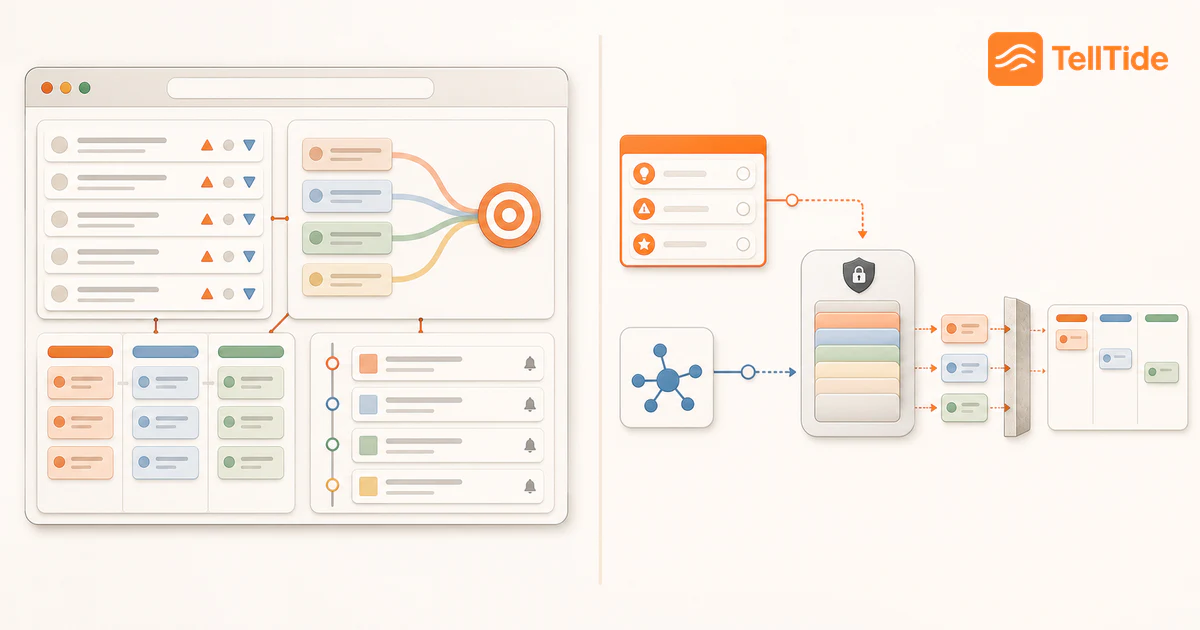
| Primary workflow | Widget or API → private feedback inbox → public roadmap | Feedback portal or widget → prioritization → roadmap → changelog |
| Capture experience | Structured feedback launcher with four product-feedback types | Public feedback portal, embedded hub, and all-in-one widget |
| Prioritization | Inbox context, status, filters, and roadmap demand | Priority tables using importance, impact, urgency, or difficulty |
| Customer communication | Roadmap votes, comments, and statuses | Roadmap, changelog, product updates, and a configurable hub language |
| Best fit | Teams wanting a focused private-first process | Teams wanting a branded public feedback and updates destination |
Choose TellTide when your inbox should stay private and practical
TellTide separates listening from publishing. Customers can report an issue or leave a review without creating a public discussion, and the product team can decide which requests are clear and relevant enough to appear on the roadmap.
The result is a smaller public surface and a straightforward internal routine. This fits teams that want feedback management without operating a complete branded community or release publication system.
Choose Supahub when the feedback hub should be a customer destination
Supahub makes more sense when customers should browse existing requests, contribute ideas, see what is planned, and read product updates in one connected place. Its configurable priority table can also give the team a more explicit framework for comparing requests.
The all-in-one hub is valuable when your team will keep each surface current. If a changelog, localized customer-facing hub, and public feedback community are active parts of your customer strategy, Supahub offers the wider workflow. If not, TellTide keeps the job smaller.
Test the hub with every audience it must serve
Configure the preferred hub language, feedback boards, roadmap, changelog, and help content your team genuinely plans to maintain in Supahub. Ask a customer to find an existing request, submit a new one, understand its status, and locate a release update. Then ask the internal owner to moderate and publish changes.
Test TellTide with the smaller private-inbox and curated-roadmap journey. The comparison should reveal whether a localized customer hub is a present requirement or whether feedback capture is the immediate problem.
Account for content operations as well as software. Every public module needs accurate copy, moderation, and update ownership; localization adds another maintenance obligation when you choose to use it. A consolidated hub can reduce navigation and tool switching, but an unmaintained hub creates more stale information than a focused feedback surface.
Specify the language and visibility requirements
Supahub's product page lists a configurable portal language and board privacy controls. A language setting does not by itself establish automatic translation of every customer submission. Define which interface text, release posts and user-generated content need translation before evaluating the feature.
Have a reviewer read the portal in the language your customers use and inspect private-board behavior as a non-administrator. Include the release owner in the trial, because a localized announcement still needs accurate content and maintenance.
TellTide's private inbox serves a different purpose from a configurable customer hub. Choose on the customer journey you need today. For the narrower path, read how to collect customer feedback.
Put this into practice: Get Pro
Questions teams ask before choosing this workflow
Is TellTide a Supahub alternative?
Yes. Both support feedback collection and public roadmaps. Supahub adds a broader public hub, prioritization tables, changelog, and configurable hub language.
Which tool keeps raw feedback private?
TellTide sends widget and API submissions to a private team inbox. Supahub supports public and private board options, but its core experience centers a feedback hub.
Can both tools be embedded in a SaaS product?
Yes. TellTide provides an embeddable launcher, while Supahub documents in-app widgets and an embeddable feedback hub.
Research notes
Sources reviewed
These references support the discussion above. Specific pricing checks are dated in the article; its editorial update date does not imply that every linked page was reverified. Confirm plan availability with each vendor.

Abhijith
Founder of TellTide, writing practical guides about product feedback, feature requests, and public roadmap workflows for SaaS teams.