At a glance
Key takeaways
- TellTide suits teams that want bugs, reviews, requests, and general feedback to begin privately.
- Nolt suits teams that want a flexible public or private board with moderation, custom fields, and community voting.
- Both offer a public roadmap, but Nolt treats the board as the main customer experience.
Publisher disclosure: TellTide publishes this comparison. Vendor descriptions are based on public documentation, not a hands-on benchmark. TellTide requires a Pro subscription; it does not include a built-in changelog, automated email notifications or ready-made integrations.
Governed feedback community or private product inbox?
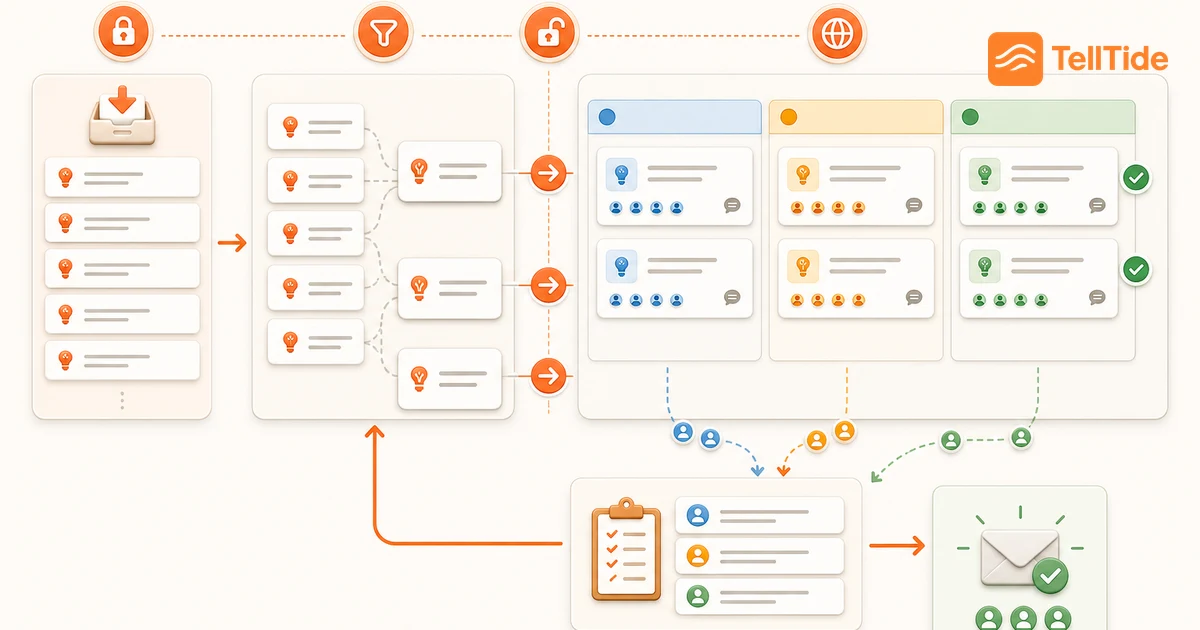
TellTide is the more direct option when a feedback launcher should collect several distinct kinds of product input. The team handles those messages in a private inbox and chooses which feature requests should become public roadmap items.
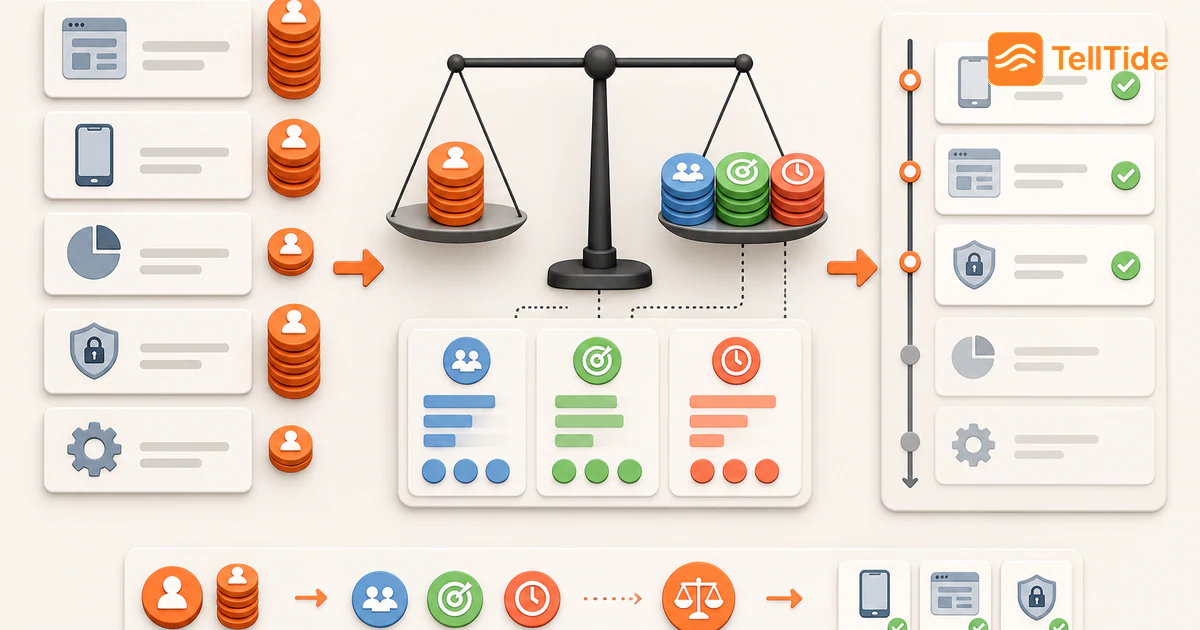
Nolt is the stronger option when you want to run a full feedback board. It supports voting, comments, custom fields, public or private access, manual moderation, duplicate management, custom statuses, SSO, integrations, and a shareable roadmap.
Nolt’s access controls compared with TellTide
| Capability | TellTide | Nolt |
|---|---|---|
| Primary workflow | Widget or API → private inbox → curated roadmap | Public or private board → voting and moderation → roadmap |
| Feedback model | Reviews, bugs, feature requests, and general feedback | Community posts with comments, votes, custom fields, and statuses |
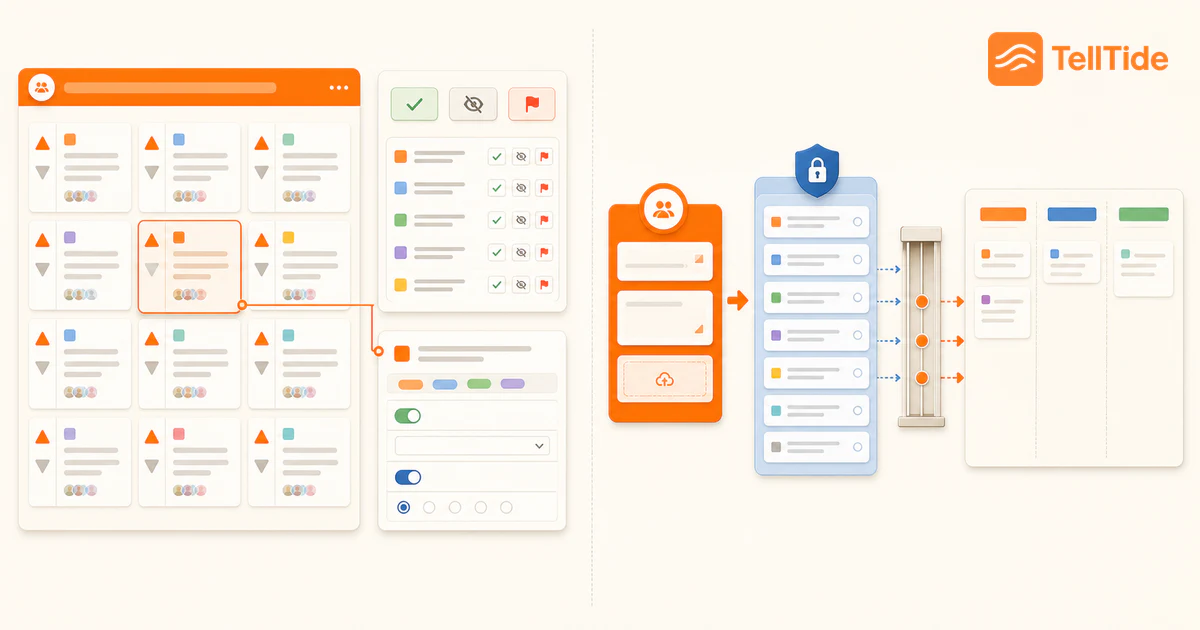
| Governance | Team controls roadmap publication after private triage | Manual moderation, private boards, passwords, domains, SSO, and post controls |
| Customization | Branded launcher and category controls | Custom branding, domain, statuses, fields, and board behavior |
| Best fit | Lean product feedback workflows | Communities needing a configurable, governed idea board |
Choose TellTide when customers should not manage the taxonomy
TellTide asks a simple question at capture time: is this a review, feedback, a bug, or a feature request? That is often enough structure for a small product team, and it prevents unrelated messages from competing on the same voting board.
Because publication comes after triage, the public roadmap reflects product candidates instead of the entire raw inbox. This helps teams stay transparent without making every submission part of a public commitment.
Choose Nolt when board control and community participation matter
Nolt gives administrators many ways to shape participation. A board can be public, private, password protected, or domain restricted; new posts can require approval; and custom fields and statuses can reflect a more specific internal process.
That flexibility is useful for larger communities or B2B customer groups with access requirements. If you need those controls, Nolt offers the deeper board toolkit. If the main need is collecting and privately triaging product feedback, TellTide is the shorter route.
Test access, identity, and moderation requirements
Write down who should be allowed to view, submit, vote, and comment: anyone, signed-in product users, selected customer accounts, or internal teammates. Recreate those boundaries in Nolt and verify how private boards, custom domains, single sign-on, moderation, and voter identity fit your customer model.
In TellTide, test the private inbox and a curated public roadmap. Confirm that sensitive messages remain private while suitable requests can gather public votes and comments. If you require several isolated communities or strict enterprise access controls, document that as a deciding requirement rather than a future possibility.
Run the test with real roles, not administrator accounts alone. Customer success, product, and a representative customer should each complete their normal task. The best configuration is the one that protects context without making participation difficult.
Include release features in the Nolt evaluation
Nolt now documents a changelog, scheduled posts, integrations, a GraphQL API and an MCP server. Treat it as more than a voting board when evaluating what you would replace. TellTide's roadmap statuses and comments do not substitute for every release or integration operation.
Create a role matrix before choosing: who can view a board, submit an item, moderate a comment and publish an update? Test using ordinary customer accounts, because an administrator can hide an access problem during a demonstration.
Confirm plan availability for your required combination of controls. If a private inbox with a selected public roadmap is enough, TellTide may fit; if several governed communities and releases are essential, evaluate Nolt's broader configuration. See the portal guide.
Put this into practice: Get Pro
Questions teams ask before choosing this workflow
Is TellTide a Nolt alternative?
Yes. Both support feedback and public roadmaps, but TellTide uses structured private intake while Nolt offers a more configurable public or private feedback board.
Which tool has more board access controls?
Nolt publicly documents private boards, passwords, domain restrictions, SSO, moderation, and anonymous participation. TellTide uses a private team inbox and a separate public roadmap.
Can TellTide users vote on features?
Yes. Users can vote and comment on the requests a team publishes to its public roadmap.
Research notes
Sources reviewed
These references support the discussion above. Specific pricing checks are dated in the article; its editorial update date does not imply that every linked page was reverified. Confirm plan availability with each vendor.

Abhijith
Founder of TellTide, writing practical guides about product feedback, feature requests, and public roadmap workflows for SaaS teams.